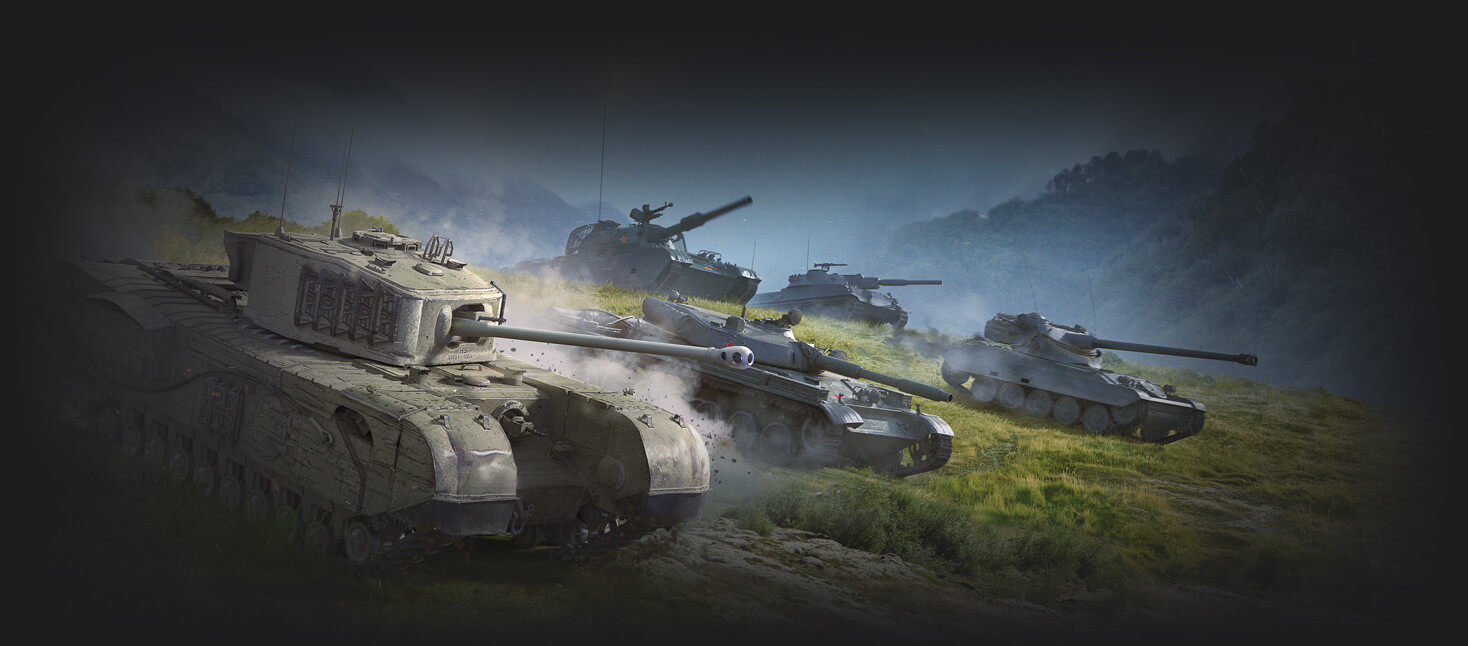
The type and characteristics of the selected vehicle determine the battle tactics. Note that the choice of crew perks, additional equipment, and consumables also depends on the characteristics of the vehicle. All these factors influence the battle's outcome. The chance of victory increases if a vehicle performs its role in the battle.
Vehicle Types
In World of Tanks, there are five vehicle types.
Light tanks. Maneuverable vehicles with compact dimensions and good concealment and view range, but with poor armoring and firepower.
Medium tanks. Versatile units, quite maneuverable, with considerable firepower and survivability, and often with good view range.
Heavy tanks. Vehicles with low maneuverability in general, but decent armor and powerful guns that can endure and cause considerable damage.
Tank destroyers. As a rule, weakly armored vehicles with very powerful and accurate guns with great armor penetration. Vehicle of this type are primarily designed to provide fire support for allies and can be ineffective and vulnerable when fighting on their own.
Self-propelled guns (SPGs). Slow and poorly armored assault guns with high-explosive shells firing at long distances can stun or cause damage to several vehicles at once. Some SPGs can use armor-piercing and high-explosive anti-tank shells, which are effective against slow and well-armored vehicles.
To get the most out of your vehicle in battle, consider both its strengths and your preferred playstyle, and select upgrades, crew perks, and battlefield tactics accordingly. You should also understand the strengths of both your allies' and enemies' vehicles to coordinate effectively with your team and join your forces properly across the battle lines.
Battle Lines
In any battle, the map can be divided into three battle lines with specific tactics suitable for each line.
Collisions with the enemy take place on the first line. Here, heavily armored vehicles push avenues of attack, while maneuverable light tanks spot enemies.
Vehicles on the second line support attacks and cover assault vehicles.
The third line is meant for sniper vehicles and artillery, which destroy enemies from ambushes and from long range.
Vehicle Roles and Functions in Battle
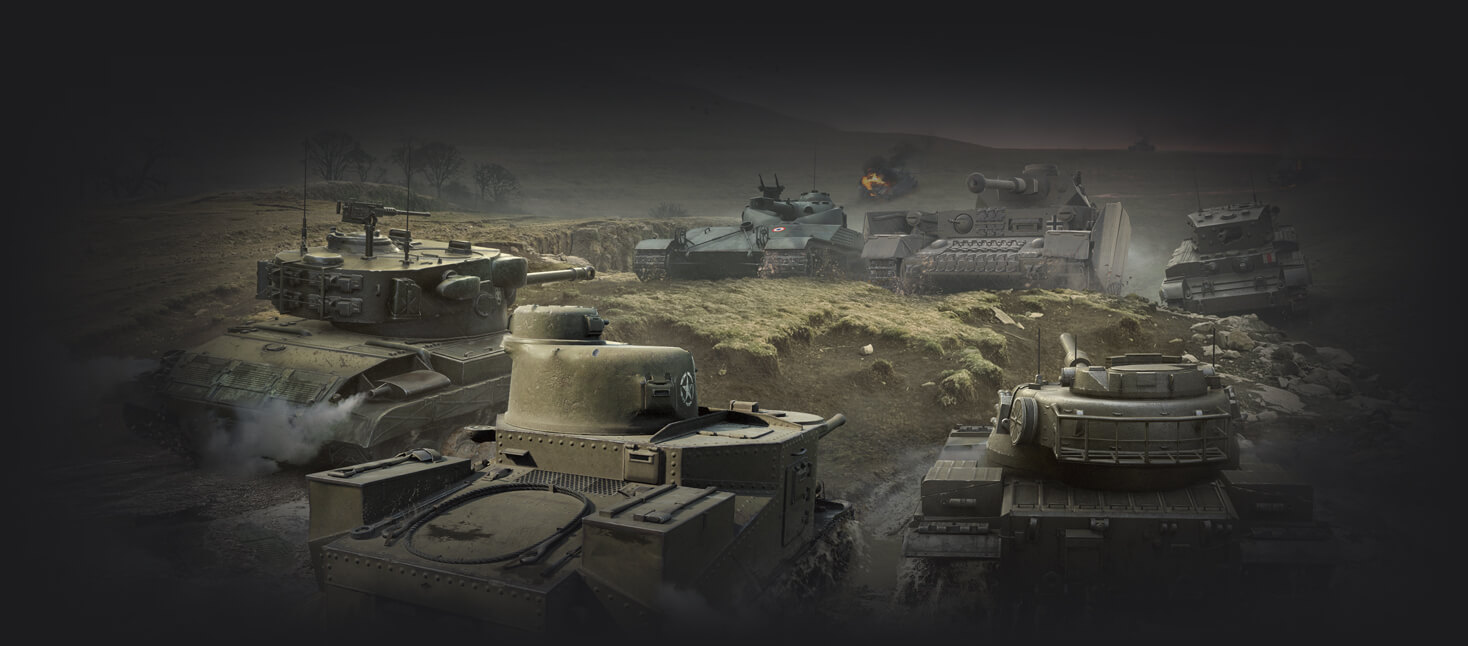
The vehicle types perform their functions on the battle lines depending on the characteristics of the selected vehicle. In addition, starting from Tier VI, all vehicles except SPGs are assigned combat roles based on their key characteristics.
Vehicles are divided into the following roles:
Assault. Vehicles with thick all-round armor and a high number of hit points, capable of trading HP effectively and holding the line at the forefront of the attack while allies deal damage. As a rule, these vehicles do not boast high mobility.
Versatile. These vehicles feature balanced stats with no major weaknesses or strong specialties, allowing them to play on any flank and adapt to a variety of combat situations.
Breakthrough. Breakthrough vehicles feature high forward speeds and solid frontal armor, allowing them to push through the lines both on the front and from the flanks.
Sniper. Snipers are equipped with powerful, accurate long-range guns and are able to deal significant damage from cover positions and from long range.
Support. Vehicles with highly effective guns that can deal heavy damage in a short period of time, but rely on coordinated team play to fully unleash their firepower.
Wheeled. Vehicles with exceptional speed and mobility, whose effectiveness heavily depends on the map and tactical situation.
The vehicle's role determines the type of field modifications available to it. In addition, some Personal Missions can only be completed using vehicles of specific types and roles.
- Light Tanks
- Medium Tanks
- Heavy Tanks
- Tank destroyers
- Self-Propelled Guns
Light tanks are lightly armored and usually small in size, but offer great view range and camouflage. Their main task is spotting enemy vehicles and providing reconnaissance to allies. They fight slow, lightly armored opponents at close range and immobilize vehicles within their view range by damaging their tracks.
Light tank roles:
Versatile. LTs with balanced characteristics that have no distinct strengths or weaknesses and can be used for both reconnaissance and fire support depending on the combat situation.
Wheeled. The fastest light tanks with special suspension that can provide maximum dynamics in battle, but depend heavily on the map and combat situation.
The role of medium tanks in a battle depends on the characteristics of a particular vehicle of this type. Medium tanks are highly diverse, ranging from vehicles designed for dynamic play on all flanks to those capable of supporting heavy tanks on the front line, as well as those intended for supporting their team with accurate fire and high damage from a safe distance.
Medium tank roles:
Assault. These medium tanks support the front line thanks to decent armor. They are capable of successfully opposing even heavy tanks, as they typically have better mobility and rates of fire. They can provide invaluable assistance when pushing through flanks and taking key positions.
Versatile. MTs with balanced armor and firepower, having no distinct strengths or weaknesses, allowing them to adapt to different combat situations and play on various flanks.
Sniper. These medium tanks possess relatively weak armor but accurate guns, and their key function is to deal steady damage while avoiding close combat whenever possible. Their high maneuverability allows them to quickly switch positions and escape danger.
Support. Tanks with medium armoring but good guns and high mobility. These MTs cover allies, provide fire support, and can deal significant damage in a short time. They are most efficient in tandem with heavily armored assault or breakthrough vehicles. In close combat, these tanks fight against a single objective in case they are able to outflank it, and often get a chance to hit first.
"Heavies" are designed for close combat. With their thick armor and the highest hit points among all other vehicles, HTs are able to push through flanks and hold the front line, absorbing a large amount of incoming damage. They are also usually equipped with powerful guns, making them effective damage dealers. However, low mobility and maneuverability, as well as a low rate of fire, demand careful choice of direction and coordinated team play.
Heavy tank roles:
Assault. Super-heavy, the most durable and protected vehicles in all directions, capable of effectively holding back the enemy and trading hit points while allies actively deal damage. Assault tanks can deal significant damage, but their mobility and gun handling are below average, which makes them vulnerable when fighting alone or against more maneuverable opponents.
Versatile. Balanced vehicles with average armor and damage, comfortable guns, and decent mobility, capable of handling a wide range of combat situations.
Breakthrough. Mobile heavy tanks with strong frontal armor, able to push through flanks while remaining highly effective on the front line. Thanks to their high specific power and speed, they are able to break through key directions on the map, especially in narrow choke points with limited firing lines. It is important to use these tanks' armor wisely and avoid trading hit points for no particular reason.
Support. Heavy tanks with the most powerful guns for their type, typically equipped with various magazine loading systems. With favorable conditions and allied support, they can deal massive damage in a short time. Their primary role is to provide fire support from mid- to close-range on the second line of battle, where they can fully unleash their damage potential. Although support HTs are more durable than support vehicles of other types, they have the weakest armor among heavy tanks. They should not be the first to trade hit points or lead flank breakthroughs.
The primary role of tank destroyers is to provide fire support and deal significant damage from various distances. Tank destroyers typically feature high penetration and strong firepower, but are often limited in mobility and gun traverse angles. Vehicles of this type provide a wide range of tactical options, from frontline combat to ambush fire from cover.
Tank destroyer roles:
Assault. These tank destroyers have very strong armor and low mobility, but more powerful guns than assault heavy and medium tanks. They can support allied HTs on the front line and hold ground and trade hit points effectively, but strongly rely on team support. They become an easy target when facing maneuverable enemy vehicles alone.
Versatile. Balanced vehicles with no distinct strengths or weaknesses, capable of fighting at any range and quickly adapting to the situation on the battlefield.
Sniper. These are the most vulnerable tank destroyers, lightly armored but dangerous, equipped with highly accurate, long-range, and very effective guns. Their main goal is to stay covered and fire from a distance. With good concealment and spotting support from allies, snipers can destroy enemy vehicles while staying invisible.
Support. Tank destroyers equipped with highly effective guns that can deal massive damage in a short time, sometimes taking away all enemies' HP in a single shot. These are usually low-mobility vehicles with moderate armor that can be vulnerable without allied support. These vehicles are best played from the second or even third line, with careful target prioritization.
SPGs fire at distant enemies with a high trajectory, which makes them good support vehicles. These vehicles have powerful guns, weak armor, and low mobility.
SPGs can use different shell types for various combat situations. Standard high-explosive shells may damage or stun a group of vehicles. Alternative high-explosive shells do not stun enemies, but they can be effective while firing at vehicles with moderate armor protection. SPGs can also destroy enemy internal modules or injure crew members. Some SPGs can use armor-piercing and high-explosive anti-tank shells, which are effective while firing at single slow-moving, well-armored vehicles.
SPGs have no role differentiation, as their battlefield function is fairly straightforward.